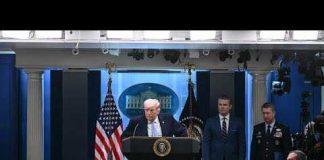
President Trump is weighing a high-stakes move against Iran’s Kharg Island that could break the Strait of Hormuz standoff—or pull America deeper into a dangerous escalation.
Quick Take
- U.S. officials are exploring options to occupy or blockade Iran’s Kharg Island to pressure Tehran into reopening the Strait of Hormuz.
- Reports say U.S. strikes on March 13 targeted military sites on the island as a warning and a way to weaken defenses ahead of any next step.
- Three Marine units are reportedly en route, including a Marine expeditionary force expected to arrive within days, though no final decision has been announced.
- Kharg Island is central to Iran’s oil-export system, but experts warn seizing it may not force Iran to reopen the strait if Tehran can simply stop production.
Why Kharg Island Is Suddenly at the Center of the Hormuz Crisis
U.S. reporting indicates the administration is actively considering occupying or blockading Kharg Island, a key Iranian oil hub roughly 15 miles off Iran’s coast. The stated objective is forcing Iran to reopen the Strait of Hormuz, one of the world’s most critical shipping lanes. With energy markets already reacting to the disruption, the White House appears to be weighing whether striking Iran’s export capacity can create leverage quickly.
Kharg Island matters because multiple outlets report it handles about 90% of Iran’s crude oil exports, making it both economically vital to Tehran and strategically relevant to global prices. That reality helps explain the administration’s logic: if Iran is using the strait closure to choke shipping, the U.S. could try to counter by threatening the infrastructure that funds Iran’s pressure campaign. The risk is that escalation cuts both ways.
What the Administration Has Said—and What It Has Not Confirmed
President Trump publicly described Kharg as vulnerable, saying the U.S. could “take out the island” and that much of the infrastructure has been dismantled except for oil pipes left intact because rebuilding would take years. At the same time, Trump told reporters he was not deploying troops “anywhere,” while adding that he would not disclose it if he were. That combination leaves the public with deliberate ambiguity.
According to officials cited in reporting, Trump’s core requirement is straightforward: Hormuz must reopen. One senior administration official said the president will choose the option he believes is necessary, including taking Kharg Island or pursuing a coastal invasion, but emphasized no final decision has been made. Another official noted ground forces have been part of conflicts under Trump, signaling the White House is not ruling out a harder military approach.
Military Movements, Timelines, and the Reality of a Ground Option
Multiple reports say three Marine units are moving toward the region, including a 2,500-member Marine expeditionary force expected within days, with additional forces under consideration. Sources familiar with deliberations also describe a timeline measured in weeks, not hours: roughly a month to continue degrading Iran’s capabilities, seize the island, and then try to use it as negotiating leverage. For families watching deployments, that timeline underscores the seriousness.
Operational planning reportedly includes Pentagon legal advisers reviewing the legality of potential actions, a sign the administration is preparing for scrutiny at home and abroad. The same reporting stresses uncertainty inside the government about whether seizing the island actually compels Iran to reopen Hormuz. That uncertainty is not political spin; it reflects a central strategic question: does taking an oil-export node translate into maritime access if Tehran chooses escalation over compromise?
Energy and Security Stakes: A Pressure Point That Cuts Both Ways
Global energy prices have risen amid the disruption of oil and gas flows through the Strait of Hormuz, and that pressure is one reason the White House is looking for leverage that can change Iran’s calculus. For Americans already tired of inflation shocks and global instability, the stakes are easy to understand: instability in Hormuz can ripple into gasoline, heating costs, shipping, and broader consumer prices. Restoring predictable maritime access is not a niche concern.
Retired Rear Admiral Mark Montgomery raised a key caution: even if the U.S. controls Kharg Island, Iran could halt oil production, limiting U.S. ability to force an outcome. He also suggested an alternative approach after additional strikes—using destroyers and aircraft to escort tankers through the strait rather than occupying territory. Senator Tom Cotton, meanwhile, has argued Iran’s closure reflects desperation and that Trump has multiple plans available, reinforcing that the administration’s posture is options-driven.
Sources:
Trump mulls risky Kharg Island takeover to force Iran to open strait
Trump considers risky Kharg Island takeover to force Iran to reopen strait: Report
Trump considers Kharg Island takeover to force Iran to reopen Hormuz
Trump considers risky Kharg Island takeover to force Iran to reopen strait: Report
Trump mulls risky Kharg Island takeover to force Iran to open Strait of Hormuz