
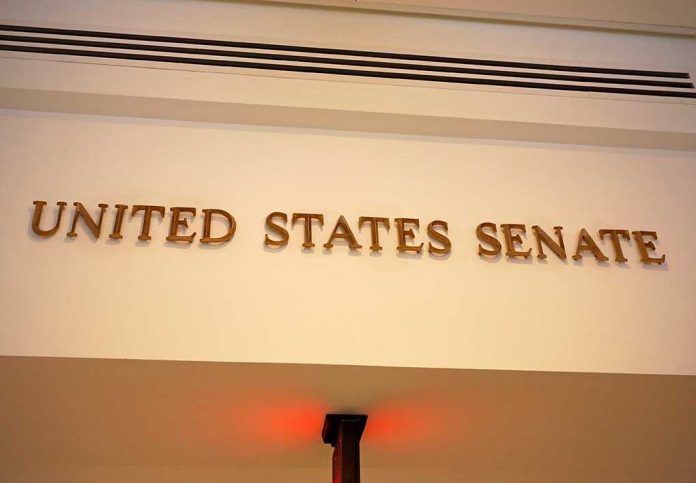
Darline Graham’s break with her brother lands in the middle of a larger fight over whether Congress should scrap the Senate filibuster to pass the SAVE America Act.
Quick Take
- The SAVE America Act would require documentary proof of United States citizenship to register and photo identification to vote in federal elections.
- Supporters say the bill would strengthen election integrity and restore trust in the system.
- Senator Ron Johnson has openly pushed Republicans to end the filibuster and pass the bill.
- Critics say the bill could burden eligible voters who lack the needed documents or face registration problems.
What the bill would do
The White House and congressional summaries say the SAVE America Act would tighten voter registration rules in federal elections. It would require documentary proof of citizenship at registration and photo identification at the polls. The bill also sets out acceptable documents, including a passport, certain government identification, and military records tied to citizenship.
Supporters present that package as a basic election safeguard. Representative Dan Meuser said the bill strengthens election integrity and restores trust in democracy, while Representative Barry Moore said it would ensure only United States citizens vote in federal elections. The White House has also promoted the measure as a major reform, calling it the most popular election reform in decades.
The filibuster is the real roadblock
Senator Ron Johnson has argued that Republicans should end the filibuster and pass the SAVE America Act. That makes the bill part of a second, separate fight over Senate rules, not just election law. In the current Senate, the filibuster still lets a minority block most major bills unless lawmakers can reach the cloture threshold.
Reporting in the provided record also shows Republican support for ending the filibuster is not unified. Some senators have resisted changing the rule, which weakens the idea that abolishing it is the only clear path. The record also notes that reconciliation was discussed as a possible workaround, but the parliamentarian could still remove non-budgetary election language.
Why critics see a burden, not a fix
Opponents say the bill would raise barriers for eligible voters who do not have easy access to passports, birth certificates, or matching identity records. Their concern is practical, not abstract: the documentation rules could affect naturalized citizens, voters who changed names, and people without current photo identification. The supplied materials do not include a study showing the bill would reduce fraud at the same scale supporters promise.
If they pass the SAVE America Act and END the filibuster, American Patriots will return to donations to WinRed! Thank you for your support Senator Ron Johnson! We know you are ready to fight to SAVE our vote, our elections! @LeaderJohnThune NOW! @Republicans @GOP @SenateGOP…
— Ren (@RenSeekTruth) August 6, 2026
That gap matters because the public argument is already polarized. Supporters frame the bill as a common-sense integrity measure, while critics call it a voter suppression push and a power grab. The result is a familiar Washington pattern: each side says it is defending democracy, while the Senate rules and the bill’s paperwork demands decide who can even get to a vote.
Sources:
redstate.com, whitehouse.gov, meuser.house.gov, ccta.regent.edu, reed.senate.gov, npr.org, congress.gov, abcnews.com, en.wikipedia.org, pennpolicy.org, flgov.com, brennancenter.org