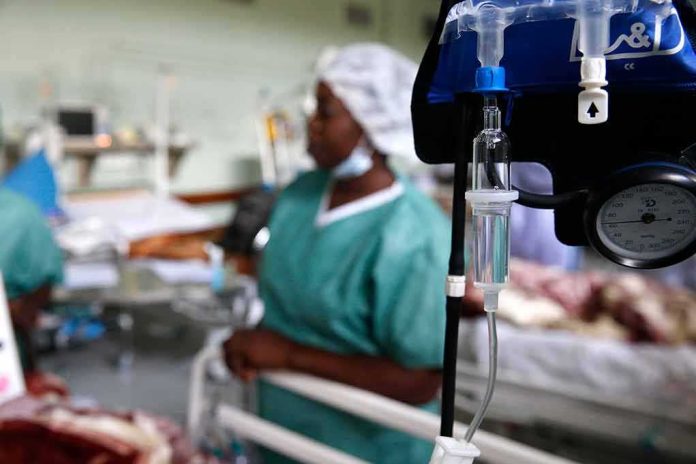
A former American Marine is now reported in a Russian hospital in a severe stupor, and his family says he may be close to death.
Quick Take
- Robert Gilman is described by advocates as unresponsive, tube-fed, and unable to interact normally.
- U.S. officials have asked Russia to release him on humanitarian grounds.
- Advocates allege torture and forced psychotropic drugs, but those claims remain unverified in the public record.
- The case shows how little families can confirm when a detainee is behind Russian prison and hospital walls.
Severe Decline Behind Closed Doors
Robert Gilman, a former United States Marine detained in Russia since 2022, is reported to be in serious condition after falling into what advocates call a “dissociative stupor.” Reuters said he slipped into that state in June and may be close to death. The reports describe a man who cannot communicate, must be fed through a tube, and has been moved from prison medical care into a civilian psychiatric ward.
The core fact is Gilman’s sharp medical decline. The harder question is what caused it. Reuters and the New York Times both said his family and advocacy groups believe he was mistreated in custody, while the State Department said it was “deeply concerned” and had asked for his release on humanitarian grounds. That combination has made the case a human crisis and a diplomatic one at the same time.
What Advocates Say Happened
Eric Lebson of Global Reach told reporters that Gilman was forced to take psychotropic drugs, told false stories about his family, and moved into a civilian hospital in a catatonic-like state. He also said the hospital blocked visits from Gilman’s mother, even though he said she had a court order allowing access. Those claims are serious, but they come from advocates speaking for the family, not from medical charts or Russian officials.
Senator Edward Markey echoed the family’s alarm in a public statement, saying his office had been told Gilman was “non-responsive and unable to interact or eat” and was “essentially catatonic.” That is important because it shows the case has reached the level of United States political attention. It also shows how little outside observers can confirm without access to the hospital, prison records, or the treating doctors.
What the Public Record Does Not Show
The available reporting does not include an on-the-record Russian medical explanation for the stupor, nor does it provide toxicology tests, medication logs, or an independent forensic exam tying the condition to torture or forced drugging. Reuters and the New York Times both make clear that the abuse claims are being relayed by family members and advocacy groups. That does not make the claims false, but it does leave the cause unresolved.
Reuters also reported that Gilman had earlier been hospitalized in July, before the latest deterioration, and that he had been moved out of prison medical care. The same reporting says Russian records had already tied his case to earlier assault convictions, including an initial arrest for assaulting a police officer while drunk. That background matters because it shows the case did not begin as a clean diplomatic dispute, even though his current condition has become the main story.
Robert Gilman, a former U.S. Marine detained in Russia is at risk of dying in custody, according to his family and an advocacy group who said he was hospitalized in a “dissociative stupor.”
“Gilman is in a life-or-death situation right now,” a rep for the family told us in an…
— Isabella Kwai (@BellaKwai) August 7, 2026
For readers on both the left and the right, the deeper issue is familiar: once a person is inside a closed state system, truth becomes hard to see. Families fear concealment. Governments make limited statements. Advocates fill the gap. In this case, the result is a grim public picture of a badly deteriorating American detainee, but a still-unproven account of how he got there.
Sources:
facebook.com, apnews.com, markey.senate.gov, cnn.com, nytimes.com