A midair collision at Carlisle Regional Airport killed a small-plane pilot and injured two state troopers, and investigators say the cause is still undetermined.
Story Snapshot
- Federal officials confirmed a Cessna 150 and a Bell 407 helicopter collided near Carlisle, Pennsylvania.
- Pennsylvania State Police say the helicopter crew was training when the crash happened.
- The National Transportation Safety Board and Federal Aviation Administration are investigating.
- Most midair collisions happen near non-towered airports at low altitude, training shows.
What Officials Confirm About the Collision
Federal Aviation Administration (FAA) officials said a Cessna 150 airplane and a Bell 407 helicopter collided in midair near Carlisle, Pennsylvania, around 7:50 p.m. local time on Wednesday, Aug. 19. State and local outlets reported the pilot of the small plane died, and two Pennsylvania State Police troopers in the helicopter were injured. The National Transportation Safety Board (NTSB) and the FAA are leading the investigation into what caused the crash.
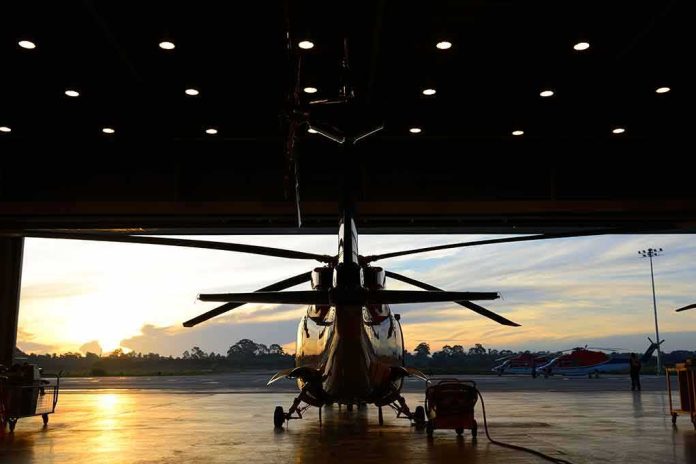
Pennsylvania leaders said the police helicopter was on a training flight at Carlisle Regional Airport when the collision occurred. The trooper crew survived with injuries, while the airplane’s pilot did not. Officials have not released a final cause. Investigators will review wreckage, flight paths, radio use, weather, and training records. That process often takes weeks or months before a probable cause is assigned in a public report.
Why This Airport Setting Matters for Safety
NTSB records and FAA training material show many midair collisions occur at or near non-towered airports, at low altitude, where pilots use a “see and avoid” method and share one common radio frequency. Past investigations cite missed visual cues, weak radio calls, or pattern entry mistakes as common links. Those reports do not blame one factor alone. They point to a chain of small errors that build into a dangerous moment, often seconds before impact.
Prior NTSB cases at non-towered fields found the “failure to see and avoid” as a leading cause, sometimes on straight-in approaches mixing with traffic flying standard patterns. Training guidance urges pilots to scan for traffic, announce positions, join the pattern correctly, and assume others may not see them. That context explains why investigators will study pattern geometry, radio clips, altitudes, and any video to map who was where and when, before naming a cause.
How Investigators Build the Timeline
NTSB teams typically document wreckage first, then collect radar data, radio recordings, and witness accounts. They analyze impact angles, damage patterns, and engine and rotor signatures. They also look at pilot qualifications, recent flights, and duty time. If video exists, it helps confirm speeds, headings, and closure rates. The final report states a probable cause and any contributing factors. That careful pace aims to prevent repeat events by fixing what failed, not guessing early.
A deadly midair collision between a small plane and a Pennsylvania State Police helicopter near Carlisle Airport in the US left 57-year-old pilot Dr Paul Sokoloski dead and two police troopers injured on the evening of August 19.
The Cessna 150 collided with a Bell 407… pic.twitter.com/NkyJ33yqRP
— India Today Podcasts (@IndiaTodayPods) August 21, 2026
The public often asks how a crash like this can happen with trained crews. Safety records show that even skilled pilots can lose sight of another aircraft at dusk, in clutter, or near the runway when workload is high. Small profile targets can vanish against terrain. Radios can step on each other. A straight-in approach can surprise pattern traffic. None of this assigns blame in Carlisle. It shows why officials warn that “see and avoid” can break down without sharp discipline in the pattern.
Why People Across the Aisle Care
Residents expect government to set clear rules, train public crews well, and share facts fast after tragedies. When crashes happen in basic places like hometown airports, many see a larger problem: systems that feel reactive, not proactive. People on the right and left want fewer preventable failures and more transparency. The Carlisle case will test whether investigators explain what went wrong and push fixes that make busy, non-towered fields safer for everyone who flies nearby.
Sources:
independent.co.uk, 6abc.com, instagram.com