
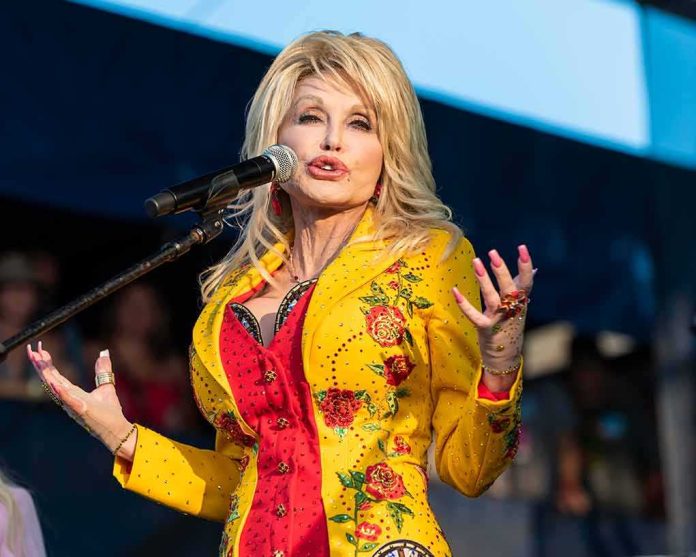
When a family spokesperson says a global icon “died peacefully” after “a brief battle with cancer,” the public hears finality; in Dolly Parton’s case, that phrasing is also the clearest, consistent through-line from reputable outlets, anchoring what is known about how her life ended and where.
The Short Version
- Dolly Parton died at age 80 in Nashville on August 25, 2026, according to her family and representatives.
- Her publicist said she died after “a brief battle with cancer,” language repeated across major outlets.
- Reports tied to her team said she was surrounded by loved ones at Vanderbilt-Ingram Cancer Center.
- The first announcement came via a family video; subsequent coverage added cause and location details as they were provided.
What Happened: Cause, Place, and How the News Reached the World
Parton’s death was announced on August 25, 2026, by a family representative in a video posted to her official channels; major networks and national outlets quickly carried the news. Within the same news cycle, coverage attributed to her publicist specified that Parton died “after a brief battle with cancer,” language that became the standard formulation across respected organizations including NPR, ABC, CNN, The Guardian, and others. The Tennessean, drawing on representatives, reported that she died at Vanderbilt-Ingram Cancer Center in Nashville, surrounded by loved ones—details echoed by other outlets that received the same briefing. Reuters’ initial wire noted that no cause was disclosed in the very first moments of reporting; subsequent updates tracked the cancer attribution as it was formally provided to the press.
While the family’s first video emphasized legacy and faith more than medical specifics, the follow-on statements from her team supplied the essential facts the public sought: cancer as the cause, Nashville as the setting, and a peaceful passing with family present. Together, those statements formed a coherent account repeated independently by multiple desks—a standard pattern when estates and publicists coordinate confirmatory details after an initial announcement.
The Language of “A Brief Battle with Cancer” — What It Conveys and What It Doesn’t
“Brief battle with cancer” is precise in one respect and intentionally spare in others. It conveys that cancer, not a separate acute event, was the proximate cause. It also signals a compressed clinical arc—weeks or months rather than years—without disclosing histology, staging, treatment course, or complications. That restraint is common in celebrity estates’ communications: it respects privacy while satisfying the public’s most salient questions—what happened, when, and where. In Parton’s case, the line also fit late-stage public context. Days before her death, she acknowledged recent health issues in an interview, framing them as concerns she had neglected while caring for her husband, an admission that made the subsequent medical news feel tragically contiguous rather than incongruent.
Clinically, many cancers can present late and progress quickly, particularly in older adults. Short symptom intervals, rapid functional decline, and hospital-based end-of-life care are not unusual in that setting. Thus, the phrase “brief battle” signals an end-of-life course that medicine recognizes, even if it withholds pathology specifics the public might be curious about. From a communications standpoint, it is a humane compromise between accuracy and privacy.
How the Reporting Coalesced: From First Word to Settled Record
Major outlets followed a familiar cadence. First came confirmation of death from a family messenger in a direct-to-audience video; then, within hours, representatives supplied cause and setting to trusted reporters, who cited those sources on the record. NPR attributed the cancer detail to Parton’s publicist, Marcel Pariseau; ABC, CNN, and The Guardian used the same formulation in independent stories. The Tennessean, a local paper with deep country music sourcing, specified Vanderbilt-Ingram as the hospital where she died among loved ones. Wire services like Reuters, whose initial alerts prioritize speed, amended their copy to include cause once it was formally conveyed. The through-line is attribution: family first; representatives next; then broad alignment as organizations corroborated language and updated their pieces accordingly.
This alignment is not evidence of groupthink; it reflects standard practice when estates control sensitive health information. In the absence of a public coroner’s docket or a family decision to publish a death certificate, the publicist’s statement functions as the authoritative declaration, and reputable outlets treat it as such. For the public record, that is sufficient: a clear cause, a date and place, and a direct family voice.
Context: Why This Announcement Model Persists
Celebrity death reporting has long operated at the intersection of urgency and verification pressure. Families and estates value control over tone and detail; newsrooms value speed and clarity. The initial family video met the first need—authenticity and tone—while subsequent representative statements met the second—specificity that outlets can cite. Research on the dynamics of death rumors on social platforms shows why this sequencing matters: emotionally charged claims travel fast; authoritative corrections travel slower. The surest antidote is to put a named source and consistent phrasing into the information stream as early as possible, which is exactly what happened here.
Institutions that regularly navigate these announcements, from publicists to legacy media, have converged on a protocol that balances compassion and factual sufficiency. The pattern seen in Parton’s case—family confirmation, followed by a publicist’s concise clinical statement and a local outlet’s confirmation of place—mirrors best practices discussed in newsroom guidance and academic analyses of rumor and correction cycles. The result is a public record that is both respectful and clear.
Dolly Parton to release one more song after death – but fans will have to wait https://t.co/1udv3ZWUpK
— The Irish Sun (@IrishSunOnline) August 26, 2026
Why the Particulars Matter
For an artist whose work defined genres and generations, the closing facts of her life will be cited for decades in retrospectives, documentaries, and museum placards. Accuracy in the cause, date, and place of death anchors those narratives. Here, the essentials meet the standard: August 25, 2026; Nashville; a brief battle with cancer; family presence at the Vanderbilt-Ingram Cancer Center, as reported from her representatives and reiterated by multiple respected outlets. Beyond the ledger of facts, that formulation also tells you something true about her final chapter—private, family-centered, and spared needless detail—consistent with the dignity she cultivated even amid a life lived brilliantly in public.
Sources:
thegatewaypundit.com, npr.org, wsmv.com, theguardian.com, nytimes.com, reuters.com, tmz.com