An Iranian drone strike on a commercial ship has turned the fragile Strait of Hormuz ceasefire into a new test of American resolve.
Story Snapshot
- U.S. forces hit Iranian missile, drone, and radar sites after a cargo ship was attacked in the Strait of Hormuz.
- President Trump and Central Command say Iran clearly violated a ceasefire meant to reopen the vital waterway.
- Iran claims the ship used an “unauthorized route” and insists it has the right to control shipping in the strait.
- Oil trade, global markets, and freedom of navigation all hang in the balance as tensions rise again.
What Triggered The Latest U.S. Strikes On Iran
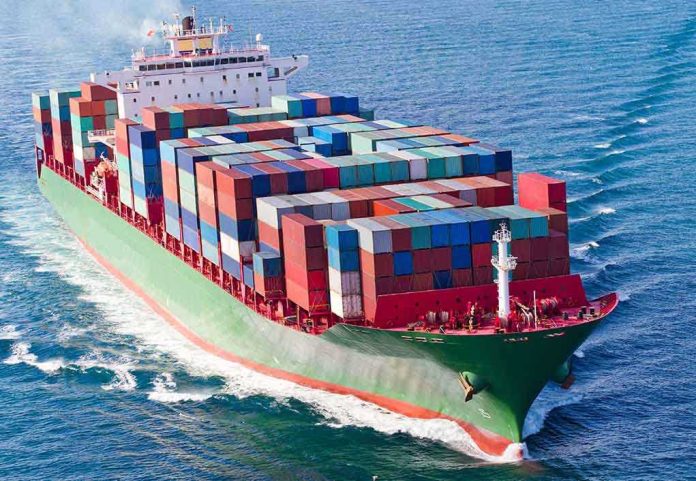
U.S. Central Command reported that American forces struck Iranian missile and drone storage sites and coastal radar positions after a Singapore-flagged cargo ship, the Ever Lovely, was hit while transiting the Strait of Hormuz. The attack came just days after Washington and Tehran reached an interim understanding to reopen the waterway and cool a months-long war. Central Command called the drone strike “unwarranted aggression” against commercial shipping and a clear breach of that ceasefire framework.
President Donald Trump publicly said the drone strike violated the ceasefire agreement and warned that the United States would respond. Vice President J.D. Vance echoed that stance, stressing that Iran signed the agreement and that “violence will be met with violence.” According to a senior defense official cited in multiple reports, six U.S. aircraft hit four Iranian targets along the country’s coastline bordering the strait and on Qeshm Island, a key location near the shipping lane. Initial reports indicated the Ever Lovely continued its journey after the hit, but the incident rattled ship traffic and insurers.
Iran’s Counter-Claims And The Fight Over Who Controls The Strait
Iranian authorities pushed back hard on the U.S. account, saying the cargo vessel was using an unauthorized route and was outside what they describe as the framework of the agreement. Iran’s Persian Gulf Strait officials and Revolutionary Guard leaders argue they have a right to control shipping in the Strait of Hormuz and to enforce designated routes for foreign vessels. Iranian media also reported projectiles striking near the Iranian port city of Sirik after the U.S. response, and officials claimed they hit targets linked to American forces across the Gulf.
Reports note real confusion around the exact terms of the memorandum of understanding that reopened the strait. Analysts say parts of the deal, especially rules for commercial traffic, are vague and leave room for disputes over what counts as a violation versus “route enforcement.” That fog benefits Tehran’s narrative that it is managing the ceasefire rather than breaking it, even as it fires drones at ships. For everyday Americans, this looks like the same old pattern: hostile regimes twisting legal language to dodge responsibility while threatening vital trade routes.
Ceasefire Strains, Energy Risks, And What It Means For Americans
The Strait of Hormuz carries roughly a fifth of the world’s traded oil, so every drone strike there hits more than one ship; it hits global energy prices and family budgets. After the Ever Lovely incident and U.S. strikes, shipping traffic slowed and “crept back” through the strait only cautiously, as captains weighed the risk of more attacks. Market watchers warned that further clashes could drive oil higher again, undoing recent relief from earlier price spikes and adding pressure on the Trump administration to stop Iran’s aggression without sliding back into full-scale war.
This latest flare-up also tests American law and war powers. President Trump already told Congress that active hostilities with Iran had “terminated” under the War Powers Resolution after a ceasefire took hold in April. Now, the White House insists the new strikes are “self-defense” actions to protect U.S. ships and troops, not a restart of major war. That framing matters for constitutional conservatives who want the commander-in-chief to defend American lives and commerce, but also expect clear limits and proper authorization when force is used overseas.
Why This Matters For Constitutional Patriots And U.S. Strength
For many conservative Americans, the core issue is simple: Iran used a drone to hit a commercial ship in a key international waterway, and the United States cannot allow rogue regimes to choke global trade or threaten our citizens without consequence. Freedom of navigation is not just a talking point; it underpins the energy supply, shipping jobs, and economic stability that families rely on. When Central Command calls Iran’s actions a threat to that freedom, it reflects long-standing U.S. policy to keep strategic straits open to lawful traffic.
➡️US forces struck 140 Iranian military targets on Saturday and took further action on Sunday. Iran attacked bases in Jordan, Qatar, Kuwait & Bahrain.
➡️Crude rallied following this and Iran announcing the Strait of Hormuz would now be closed, though the US said transit has… pic.twitter.com/wPDG3Si3CF
— Anzo Capital (@Anzo_Capital) July 13, 2026
At the same time, there is real concern that murky deals and half-quiet ceasefires invite exactly this kind of testing by hostile actors. Iran’s claims about “unauthorized routes” show how quickly an agreement can be twisted into a weapon against neutral shipping. That is a warning for future negotiations: any deal that touches core U.S. interests, like shipping lanes or military basing, must be crystal clear, enforceable, and backed by the credible threat of force when broken. Patriots will watch closely to see if Washington pairs strong words with firm, lawful action to deter further attacks while defending American workers from the fallout at the gas pump and in the grocery aisle.
Sources:
youtube.com, reuters.com, foxnews.com, cnbc.com, straitstimes.com, washingtonpost.com, wxii12.com, cbs19.tv, axios.com, csis.org