When the facts are clear, say them plainly: a 14-year-old boy was shot in the leg just before 5 p.m. near 153rd Street and Jamaica Avenue by a gunman dressed in black, the assailant fled on foot, and the teen was taken to Jamaica Hospital in stable condition—no arrest yet, no motive confirmed.
The Short Version
- A 14-year-old was shot in the leg near Rufus King Park around 5 p.m.; police say the shooter fled on foot.
- EMS took the victim to Jamaica Hospital; he was reported in stable condition.
- No arrest has been made and police have not confirmed a motive or whether the teen was targeted.
- Initial accounts emphasize the suspect’s all-black clothing; details beyond location, injury, and flight remain limited.
What Happened: The Established Facts
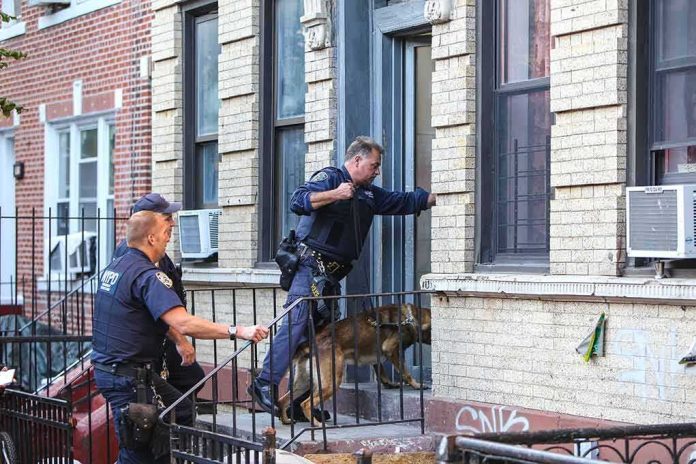
Police and contemporaneous reporting put the shooting at the corner of 153rd Street and Jamaica Avenue, adjacent to Rufus King Park in Jamaica, Queens, shortly before 5 p.m. The victim, a 14-year-old boy, suffered a gunshot wound to the leg. Responding officers and EMS transported him to Jamaica Hospital, where he was listed in stable condition. The shooter, described as dressed head-to-toe in black, fled the scene on foot. As of the time of reporting, police had not identified a motive and had not made an arrest. These are the load-bearing facts; they are consistent across multiple outlets citing NYPD as the source of record.
Precision about geography matters in urban incidents. One account places the event “near” Rufus King Park; another specifies the intersection outside the park. The distinction is small for responders—seconds and feet—but large in subsequent retellings, which is why anchoring to the intersection as the operating location is the soundest choice until case documents make the boundary definitive.
How Early Crime Reporting Works—and Why Details Start Narrow
In the first hours after a shooting, the public record typically consists of what police are ready to say, what EMS can confirm, and what reporters can corroborate at the curb: location, injury, condition, suspect description, and whether anyone is in custody. That reliance on law enforcement as the initial, authoritative source is not an aberration but the norm; decades of media research show police supply much of the “raw material” in early incident coverage, which by design prioritizes timely, verifiable facts over interpretive texture.
This case follows that pattern. We know where and when, the victim’s condition, the suspect’s clothing, and that the shooter fled. We do not know the number of shots fired, whether there was a prior confrontation, or the exact trigger for the encounter. Those unknowns are not evasions; they are simply the pieces that tend to surface later—after scene processing, canvasses, video pulls, and preliminary ballistics tie-out—when detectives have something they can stand up publicly without compromising the investigation.
Evidence That Typically Fills In Next
If you track cases like this over months rather than hours, the blanks start to resolve in familiar ways. The incident complaint report anchors time and place; CAD/911 timestamps reconstruct the call-to-cuff timeline; memo book entries and DD-5s (detective follow-up reports) add witness canvasses; and, in a city lined with camera lenses, surveillance video often becomes the lodestar. For a street-corner shooting near a major intersection, expect requests to nearby businesses, MTA cameras if applicable, and any municipal feeds facing Jamaica Avenue. If shell casings were recovered, Integrated Ballistics Identification System (IBIS) hits can link the firearm to other scenes; that’s how patterns surface and why “leg wound, stable” can still be a key node in a larger network of incidents.
Medical documentation similarly closes gaps. EMS run sheets and hospital trauma intake confirm wound location, caliber in some cases, and number of injuries. Those records resolve debates that proliferate in shorthand coverage—single shot versus multiple, graze versus through-and-through—and inform charging decisions if and when a suspect is apprehended. None of that is exotic; it is the ordinary machinery of a shooting investigation, proceeding on a clock that is slower than social media but aligned to evidentiary standards suitable for court.
Why Clothing Descriptors Loom Large Early
The “all black” descriptor is not narrative flourish; it is a functional placeholder when there is no name or clear facial capture. Clothing, gait, and flight path often become the triad that ties a suspect across cameras—black hoodie and pants eastbound on Jamaica Avenue at 4:53 p.m.; same silhouette turning south on 153rd at 4:55; possible discard of a garment near a storefront awning. Investigators work backward from the last clear image to the first, then forward from the scene to exits, building a time-and-space braid that can survive defense scrutiny. As better identifiers emerge—tattoos, footwear, a distinctive backpack—the “all black” tag recedes, but at T+2 hours it may be the only broadcastable detail.
Location and Pattern: How This Fits in Queens Street Violence
Jamaica’s core corridors—Jamaica Avenue, 153rd Street, Archer Avenue—carry consistent foot traffic and abundant cameras. That combination typically improves clearance prospects relative to low-visibility sites. Prior incidents in and around parks in Southeast Queens have varied from disputes that metastasized into gunfire to targeted confrontations migrating across blocks. The throughline is not the presence of a park; it is the collision of youth mobility, interpersonal disputes, and ready access to firearms. While each case is discrete, the investigative playbook—canvas, video, ballistics, and community leads—hardly changes. A street-corner shooting adjacent to a park belongs to this larger pattern, not to a mythology about parks as crime loci.
What We Know, What We Don’t, and What Actually Matters
We know the essentials: a juvenile victim, a leg wound, a stable hospital status, a suspect on foot in black clothing, and no arrest or confirmed motive. We do not yet know whether the boy was specifically targeted, how many rounds were fired, or the immediate precipitating event. Those unknowns matter for classification—random versus targeted, dispute versus ambush—but they do not alter the operational advice for a community member processing risk: broad daylight does not confer immunity, and situational awareness on high-footfall corners is prudent even at family-friendly hours.
It is also worth drawing a boundary line around what the current record does not support. There is no credible basis here for attributing the shooting to a known group, connecting it to a prior case, or mapping it onto a single-policy debate. The work ahead is empirical: secure video, confirm the route, find witnesses, test ballistics, and build a prosecutable case.
A gunman in an all-black outfit remains at large after shooting a 14-year-old boy in the leg near Rufus King Park in Queens.https://t.co/Oha1Uf1xPf pic.twitter.com/75wnJhgZgL
— Next Stamina (@NextStamina) September 7, 2026
Practical Implications for Readers
For residents and parents, two takeaways endure beyond this incident. First, the most actionable public information in the early window is geographic: know the corners, the sightlines, and the egress routes you and your family use. Second, when police ask for tips, clothing-based descriptors paired with time and direction of travel are often enough to unlock a camera pull; if you were there and remember those details, share them. For civic leaders and business owners along Jamaica Avenue, maintaining camera coverage and retention policies that preserve footage for at least a week can be the difference between a cold lead and a usable timeline.
Sources:
qns.com, fox5ny.com, nydailynews.com, nypost.com, queensda.org, facebook.com