
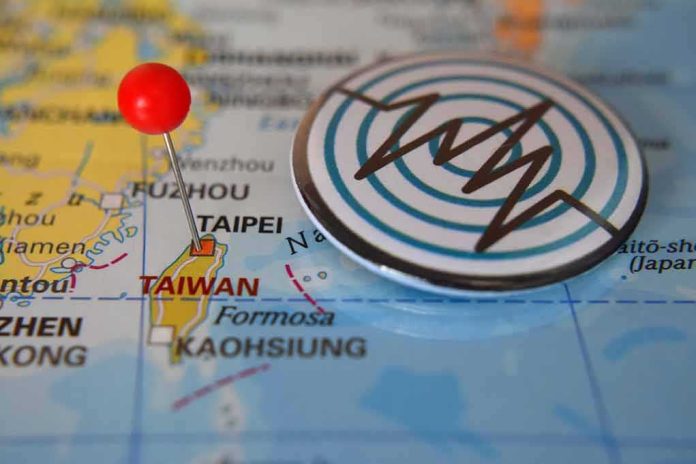
Taiwan’s president warned party members to resist Beijing’s “red terror,” linking it to a new Chinese law he says could target people across borders.
Story Snapshot
- President Lai urged Taiwan’s ruling party to oppose Beijing’s “red terror.”
- Lai tied the warning to China’s new “Ethnic Unity” law and legal reach.
- He reaffirmed Taiwan’s sovereignty and equal status with Beijing.
- China has long claimed Taiwan as its own and rejects Lai’s stance.
Lai’s Warning and the “Red Terror” Framing
President Lai Ching-te told members of the Democratic Progressive Party to unite against what he called Beijing’s “red terror.” He said Taiwan must protect its democracy and must not become part of China. He delivered the remarks at a party meeting and urged a firm response to pressure from across the strait. News outlets captured his call for unity and his use of the “red terror” phrase to describe the threat from Beijing.
Lai’s warning followed weeks of sharper language from his administration. He said China is pushing legal and political tools to shape behavior inside Taiwan. He also pointed to recent moves that, in his view, try to chill speech and activism. Television and print reports summarized his appeal as a push to harden Taiwan’s defenses at home and abroad, while keeping faith with voters who back self-rule and free elections.
Legal Pressure and China’s “Ethnic Unity” Law
Taiwan media said Lai linked Beijing’s new “Law on Promoting Ethnic Unity and Progress” to legal warfare. He argued the law could support cross-border actions against people Beijing targets. He framed this as part of a wider toolkit that also includes influence operations and threats. His government outlined countersteps aimed at blocking such reach inside Taiwan, including stronger rules and alerts for civil society groups that face outside pressure.
Analysts have tracked a pattern in which Beijing mixes laws, diplomacy, and military drills to press its claim. Research groups describe how these measures pair with narratives that brand Taiwan leaders as “separatists.” They report that this approach aims to deter foreign support for Taiwan and to narrow Taipei’s global space. They also note that Beijing’s legal lines rest on its “one China” view, which rejects Taiwan’s claim to independent status.
Sovereignty Claims on Both Sides of the Strait
Lai has said Taiwan is a sovereign, independent nation and that the Republic of China and the People’s Republic of China are not subordinate to each other. His inaugural address put this point in formal terms, anchoring it in Taiwan’s existing laws and identity. That stance builds on prior leaders who also stressed de facto independence. Lai’s team has paired this message with plans to bolster defense and protect Taiwan’s democracy from foreign interference.
China’s leaders maintain that Taiwan is part of China and that reunification is a core national goal. Party and government outlets repeat this claim in speeches and documents. Commentaries explain that Beijing sees legal and political tools as part of a long game to stop what it calls separatism. Outside monitors say this clash of claims fuels cycles of tension, from trade pressure and diplomatic isolation to military flights near the island.
Why This Matters for Americans Watching Asia
U.S. voters see rising risks in Asia that can hit wallets and security at home. Cross-strait shocks can rattle supply chains for chips, phones, and cars. They can also pull Washington into new costs and commitments. Many Americans feel the federal government often reacts late and manages crises poorly. Clear facts from Asia help citizens judge whether leaders are planning ahead, or just playing politics while risks build.
What to Watch Next
Watch how Taipei turns its warnings into concrete steps, such as new laws, budget moves, and outreach to allies. Track Beijing’s next signals, including military flights, coast guard patrols, and legal notices. Look for steady messages from Washington and partners that lower the chance of a mistake. Small changes, repeated over months, will show whether this standoff cools or moves closer to a dangerous line.
Sources:
youtube.com, taipeitimes.com, nbcnews.com, reuters.com, jamestown.org