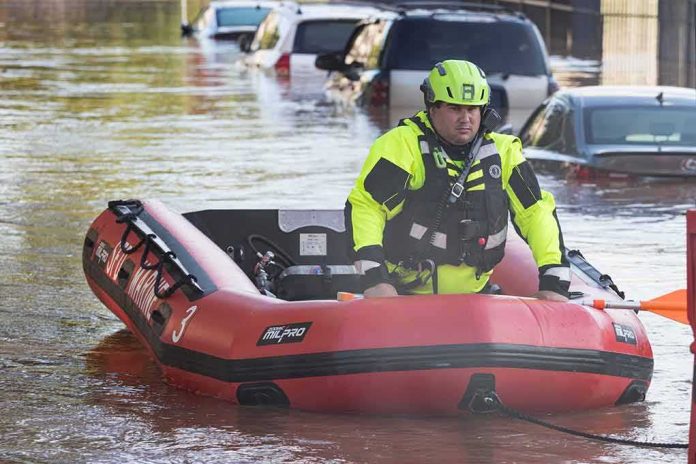
Federal aid arrived as Indiana’s worst flooding in decades killed at least five people and forced mass water rescues across multiple counties.
Story Snapshot
- Officials confirmed at least five storm-related deaths across several Indiana counties.
- President Trump approved emergency aid after Governor Braun’s statewide disaster declaration.
- Indianapolis crews performed 50-plus water rescues and cleared neighborhoods under evacuation guidance.
- Rainfall near 10–12 inches and record river crests drove flash flooding and infrastructure shutdowns.
Confirmed Deaths And Where Flooding Hit Hardest
Indiana emergency leaders reported at least five deaths tied to flooding and high winds. The toll spanned central and northwest counties as storms swept the state in mid-August. Reuters cited fatalities in Jennings, Lake, Porter, and LaPorte counties, plus two in Delaware County. Officials said investigations continued on other cases as water levels shifted and access improved. Authorities emphasized that people should avoid flooded roads and follow local evacuation orders to prevent more loss of life.
Indianapolis neighborhoods along the White River faced the most urgent rescues. The Indianapolis Fire Department reported more than 50 water rescues as crews evacuated dozens of residents and pets from rising water. Local outlets described boat operations near 78th Street and Keystone Avenue and cleared areas in Ravenswood and Rocky Ripple. Crews warned drivers not to enter water-covered streets. Leaders said totals moved fast during the peak of the event, making real-time counts fluid.
State Actions And Federal Emergency Support
Governor Mike Braun declared a statewide disaster emergency, activated the Indiana National Guard, and asked Washington for help. President Trump approved a Presidential Emergency Declaration, which unlocked federal assistance through the Federal Emergency Management Agency (FEMA) to support life-safety operations, sheltering, and protective measures. Federal law allows emergency declarations when state and local capacity is strained and lives and property are at risk, even before full damage totals are known.
Local governments opened shelters and issued travel advisories as waters rose. Sites included facilities in Indianapolis and Hamilton County to take in evacuees. Citizens Energy Group shut the White River North Water Treatment Plant to protect critical equipment from flood damage. County emergency managers posted travel watches and road closures to reduce risk and ease rescue access. Utilities reported pockets of outages as crews worked between storms and intermittent high winds.
Rainfall, River Crests, And Why Flood Numbers Shift
Meteorologists and local officials reported rainfall of about 10 to 12 inches in the hardest-hit corridors. River gauges showed the White River cresting near or above historic marks, including a reported 23.9 feet at Noblesville, beating a 1913 record. Such totals push water into neighborhoods and low crossings, which are where most swift-water rescues occur. Flood operations often expand quickly at night when drivers misjudge depth on familiar roads.
Early rescue and fatality counts often change during large floods. Crews must reach isolated areas, confirm identities, and reconcile duplicate calls. National and local reviews show vehicle-related incidents make up a large share of flood deaths, which explains why officials stress, “Turn around, don’t drown.” As roads close and detours spread, people face pressure to get home or check on loved ones, which can raise risk during peak flow periods.
What Residents Should Do Next
Residents in flood-prone areas should heed local orders, watch official alerts, and avoid any road with water over it. People returning home should document damage with photos and keep receipts for cleanup needs. Those with National Flood Insurance Program coverage can start claims as soon as it is safe to re-enter. Community groups can help by checking on neighbors, sharing verified shelter locations, and leaving roads clear for emergency vehicles and utility trucks.
[Take 13/15 · 𝕏-3]
### 𝕏-3. Midwest flash floods worsen; Indiana requests federal aid as storms continue
*(as of 2026-08-16)***1. The Frame**
**What people think this is about:** A worsening natural disaster crisis in the Midwest, with deadly flash floods in Indiana…
— GrumpyNews, emotionally clean news. (@GrumpyNews_) August 16, 2026
Leaders across parties agreed on the basics: save lives first, protect critical infrastructure, and get aid moving. The speed of the declarations shows government can act fast when the threat is clear. The test now is follow-through: stable sheltering, transparent damage checks, and fair help for families and small businesses. Clear records, from incident logs to coroner reports, will help the public see what happened and how agencies plan to prevent repeat harm.
Sources:
aljazeera.com, indystar.com, reuters.com, cfjctoday.com, wfyi.org, abcnews.com, x.com